
Featured Article
Breaking the Media Bubble: Decentralization, Algorithms, and the Power of Consumer Action
Introduction: A Fractured Media Landscape
The idea for this article began with a personal tipping point. News broke that Elon Musk was teasing the idea of purchasing MSNBC, and social media erupted. Some cheered the potential shake-up of mainstream media by a billionaire they admired. Others panicked, calling it another dangerous consolidation of power. What struck me most wasn’t the opinions themselves but how divided the reactions were, shaped entirely by political bubbles.
Then came another controversy. Joe Scarborough and Mika Brzezinski, co-hosts of MSNBC’s Morning Joe, made a trip to Mar-a-Lago to meet President-elect Donald Trump. This move, following their sharp critiques of Trump—including comparisons to authoritarian figures like Hitler—ignited outrage among their left-leaning audience. Their visit raised questions about integrity, trust, and partisanship within media spaces.
At the same time, my feed became a relentless loop of speculation about Kamala Harris’s loss. The same question echoed across platforms: “Why did Kamala lose?” It wasn’t just curiosity—it felt like a manufactured obsession, amplified by algorithms designed to keep us engaged, even at the expense of nuance.
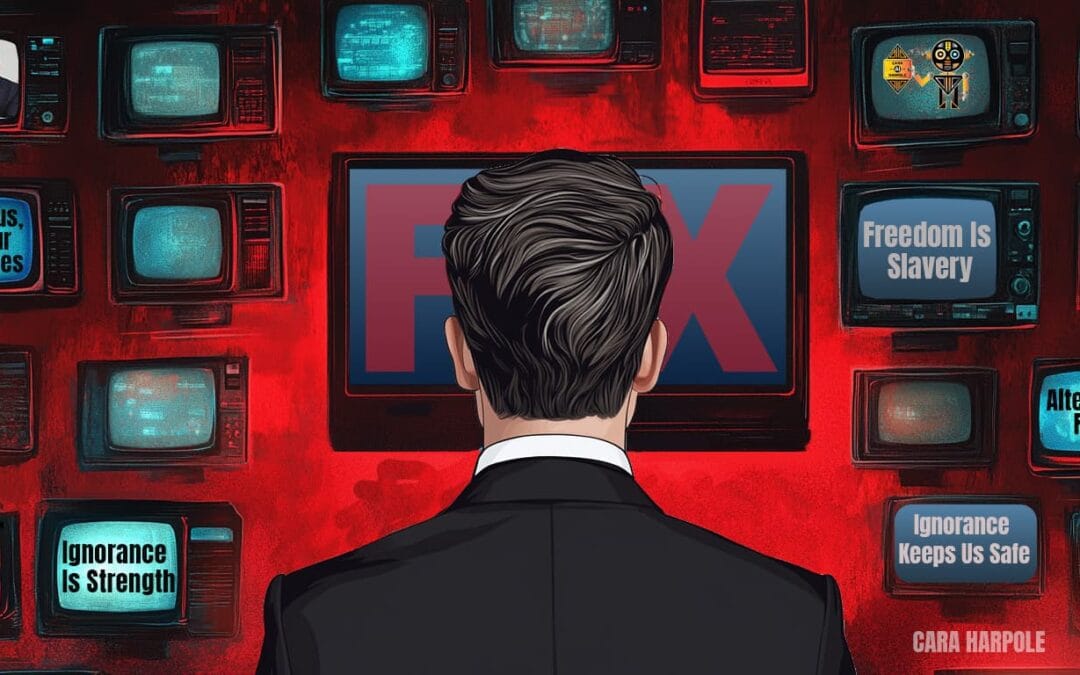
These seemingly unrelated moments reflect a deeper issue: a media landscape shaped by deregulation, algorithmic bubbles, and eroding trust. As long as the “infractor”—the rule breaker—belongs to our side, we overlook the larger risks. Orwell’s 1984 feels eerily prescient:
“The party told you to reject the evidence of your eyes and ears. It was their final, most essential command.”
In today’s media landscape, algorithms feed us what we want to see, muting diversity and dulling our natural alarm bells.
The Telecommunications Act of 1996: A Bipartisan Creation
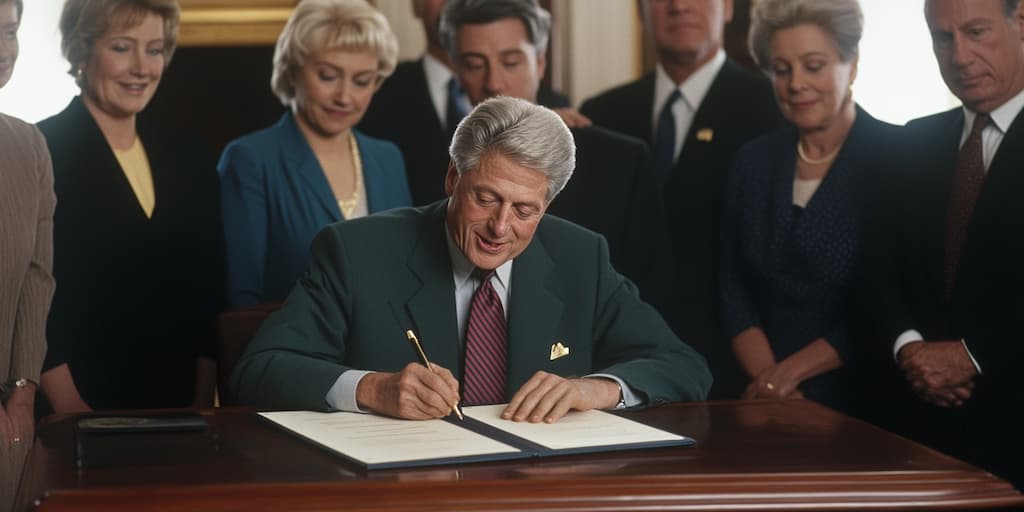
To understand how we got here, we need to revisit the Telecommunications Act of 1996. Signed into law by Democratic President Bill Clinton and supported by Republicans like Newt Gingrich, this bipartisan effort was heralded as a modernization of media laws for the internet age. It lifted ownership caps, allowing corporations to own multiple media outlets in the same market.
At the time, this deregulation was framed as a win-win: fostering competition and innovation while reducing government interference. Instead, it unleashed a wave of media consolidation. Figures like Rupert Murdoch, an Australian businessman, were able to build empires that dominated American media. Murdoch’s Fox News reshaped political discourse, normalizing partisanship and sensationalism.
Other countries, however, have enacted safeguards:
- Canada requires majority Canadian ownership of broadcasting companies to protect national interests.
- Australia subjects foreign acquisitions to stringent review processes.
- India enforces caps on foreign ownership and mandates partnerships with local citizens.
In contrast, the U.S. allows unchecked consolidation, leaving its media vulnerable to excessive influence—whether by foreign moguls like Murdoch or billionaires like Elon Musk.
Algorithms: The Silent Architects of Division
Beyond ownership, algorithms play a critical role in shaping what we believe. Designed to maximize engagement, they prioritize sensationalism and outrage over nuance, creating echo chambers that isolate users from diverse perspectives.
The endless speculation about Kamala Harris’s loss is a prime example. Instead of exploring the election’s broader implications, algorithms churned out repetitive content designed to provoke emotional reactions, deepening divisions without encouraging critical thought.
This isn’t just about politics—it’s about trust. When algorithms bury thoughtful, nuanced content in favor of trending topics, they erode our ability to engage with complex issues and foster meaningful dialogue.
A Glimpse of Change: BlueSky and Other Alternatives
Despite these challenges, alternatives are emerging. Platforms like BlueSky represent a decentralized, user-focused model. Others, such as Mastodon, Substack, and Vero, offer spaces for thoughtful, community-driven engagement.
Each platform approaches the problem differently:
- BlueSky empowers users with customizable algorithms, giving them control over their feeds.
- Mastodon fosters small, decentralized communities with a focus on user autonomy.
- Substack supports independent publishing, prioritizing in-depth content over sensationalism.
- Vero offers ad-free, chronological feeds for authentic interactions.
While these platforms show promise, their success hinges on consumer adoption. Innovation thrives when users demand better—and support alternatives.
Empowering Consumers to Drive Change
Consumers hold immense power to reshape the media landscape. Here’s how we can take action:
- Demand Change Through Action: Leaving platforms that fail to align with consumer values sends a clear message. As seen with the rise of organic products, collective action can shift industries. Platforms like X will either adapt or fade as users migrate to alternatives like BlueSky or Mastodon.
- Support Alternatives: Engage with platforms that prioritize transparency, user control, and community-driven values. These spaces thrive when consumers actively participate.
- Reconnect Offline: Building connections through activities like community dinners, sports, or creative hobbies can help break the algorithmic grip. For example, a monthly dinner with friends from diverse backgrounds fosters understanding and empathy, even in polarized times.
Encouraging Transparency Without Alienation
While algorithm transparency is crucial, expecting companies to fully disclose proprietary information is unrealistic and risks alienating businesses. Instead, we should encourage platforms to adopt transparent practices that prioritize fairness and diversity without compromising competitiveness. A business-friendly approach balances consumer trust with profitability.
Conclusion: Breaking the Bubble
The media landscape is fractured, but change is possible. By demanding better practices, leaving platforms that fail to serve us, and supporting alternatives, we can reshape the narratives that influence our lives. Rebuilding trust will also require stepping away from screens and reconnecting with each other through offline activities that remind us of our shared humanity.
Change won’t come from companies alone—it starts with us. By making intentional choices, we can break free from the media bubble and create a future where diversity, empathy, and critical thinking thrive.

What Do You Think?
How do you see the media landscape evolving? Are platforms like BlueSky or Mastodon enough, or do we need more systematic changes?
I’d love to hear your thoughts:
- What alternative platforms have you explored?
- How do you step outside your bubble and reconnect with others?
Let’s start a conversation—leave a comment below or share this article with someone who might have their own perspective to add.
You can also join the conversation at Linkedin https://www.linkedin.com/newsletters/7239050529757110272/
No Results Found
The page you requested could not be found. Try refining your search, or use the navigation above to locate the post.